Why Turntables Are Fundamentally Different
Turntables operate on a fundamentally different principle from digital and magnetic media. Digital and magnetic media sources are totally isolated from the environment. Unfortunately, that's not the case with turntables.
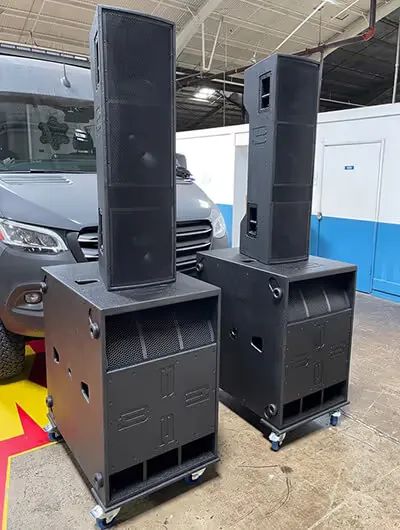
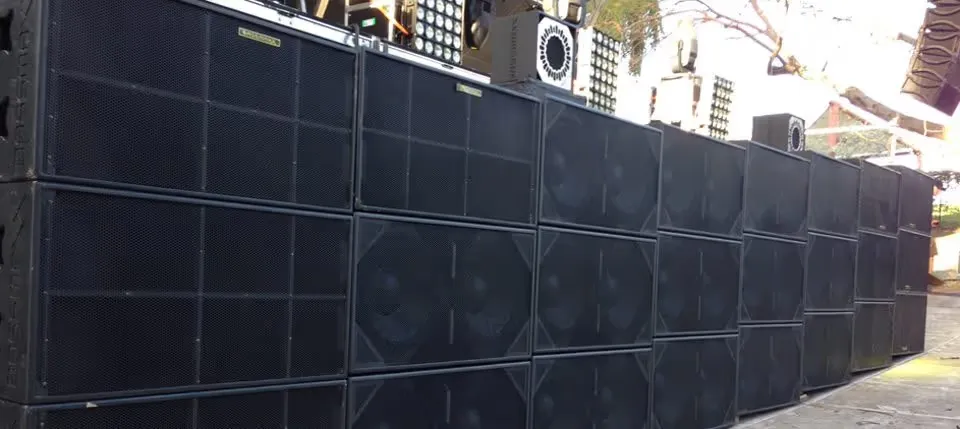
A turntable pickup needle is a stone — usually a tiny industrial diamond — glued to the end of a tiny rod. Moving the needle produces a tiny electrical signal that is amplified by many orders of magnitude. Sound is physical vibrations, and the output of subwoofers can be picked up by the needle and re-amplified.
How Speaker Protection Handles (and Doesn't Handle) This
Within the speakers, limiters are implemented to prevent over-powering the woofers under normal circumstances. Even in the subwoofers, the very lowest frequencies are filtered out — but a balance has to be struck between providing plentiful low-frequency output and preventing damage.
When a powerful signal well below resonance is put into a ported system, the woofer can move too far, damaging its suspension and/or voice coil.
What Can Be Done to Protect Deep-Bass Subwoofers from Turntables?
Option 1: Keep Turntables Out of the Building
The first, best, easiest, and cheapest answer.
Option 2: Build an Immovable Turntable Stand
Build an absolutely solid, immovable platform starting from a concrete floor with concrete and/or cinderblocks. No part of the stage, railings, or anything at all can touch the turntable stand. When you can stomp-kick the stand without skipping the record, you've got a good platform.
Option 3: Use the MK3 Turntable Preset
The MK3 line has turntable preset settings available in all subwoofer models. This filters out the problematic infrasonic content while preserving the bass frequencies that vinyl can actually reproduce.