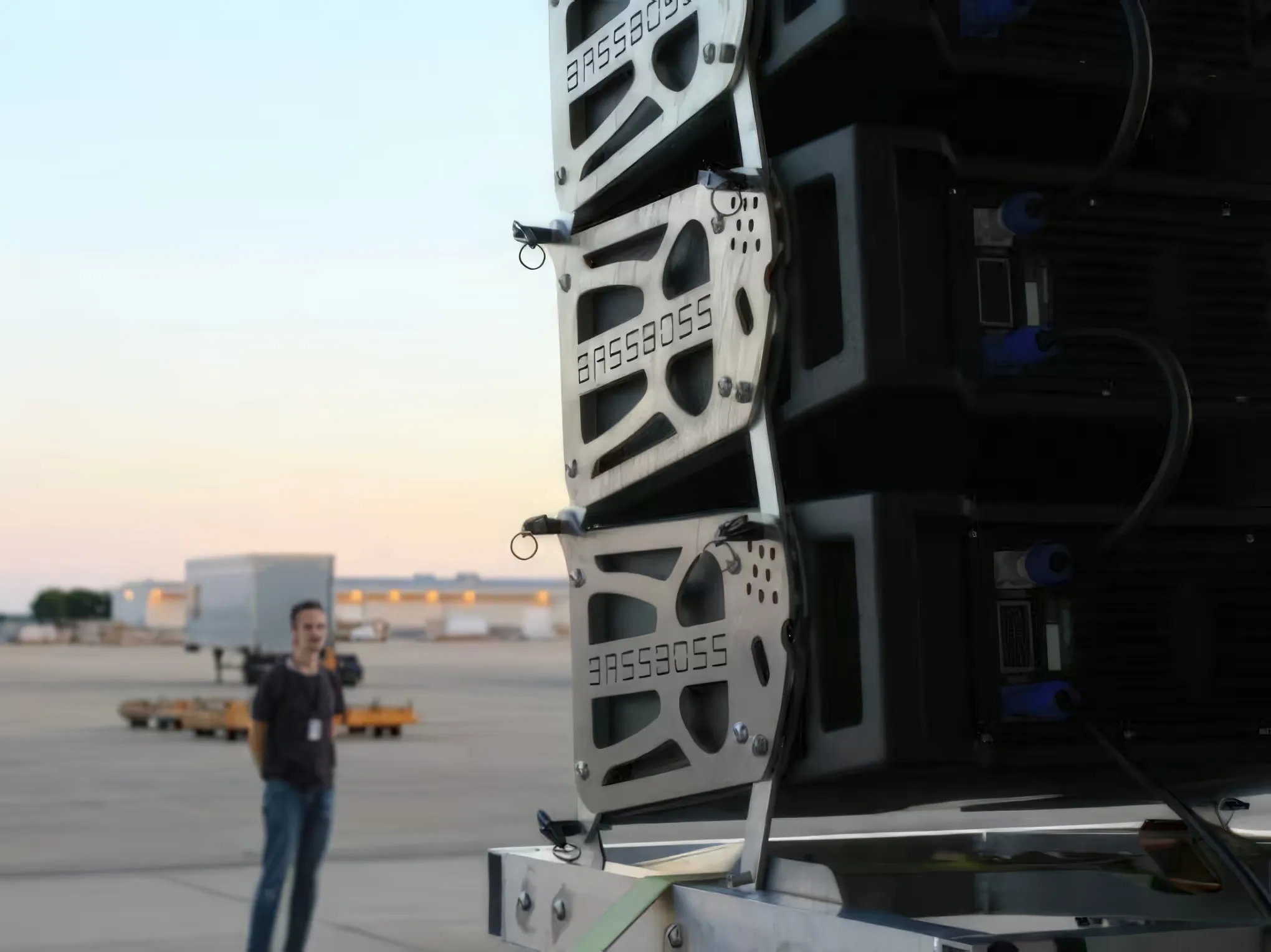
The Basic Principle: Mutual Assistance
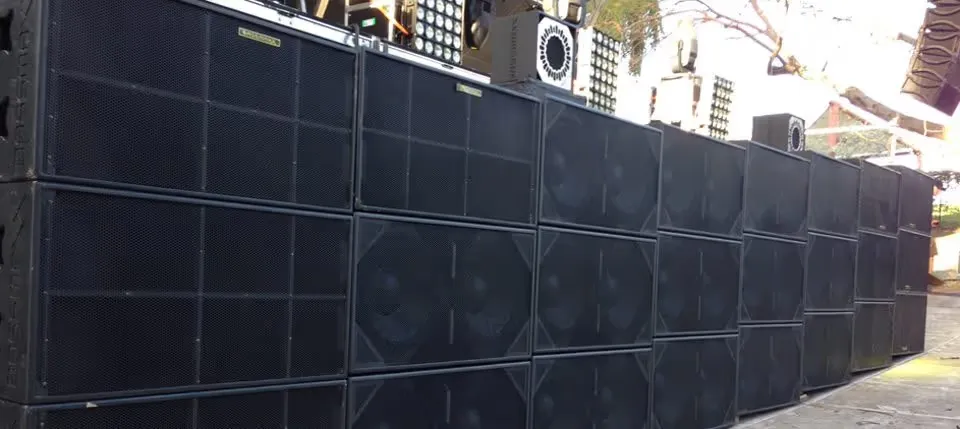
If you have a loudspeaker operating at its bottom limit, and supply another box to assist it, collectively their bottom limit extends lower. That effect is true for any subwoofer pair. When you put multiple boxes together, the low-frequency corner does shift down slightly.
Frontal Area and Wavelength
It's the same principle that allows multiple horns to extend lower than individual horns — a ratio of frontal area to wavelength. There is also a slight increase in directivity that affords a slight increase in measured output at the lowest frequencies.
Why the Effect Is More Dramatic with Horns
The effect is much more noticeable with horns because their frontal area is often too small to make them efficient at the lowest frequencies. Multiple horns are required to achieve the intended frequency response.
Boundary Loading: The Second Mechanism
A box operating in free space versus half space versus quarter space versus eighth space will measure higher SPL at the same distance in each progressively constrained environment.
An adjacent loudspeaker acts as a boundary constraint but also contributes energy into the same space. Both loudspeakers are now pushing into a higher pressure environment collectively than if they were each operating alone. This shifts the resonance of the system down slightly — contributing to the low-frequency extension of the vented enclosure via a second mechanism.