What Is a Point Source Loudspeaker?
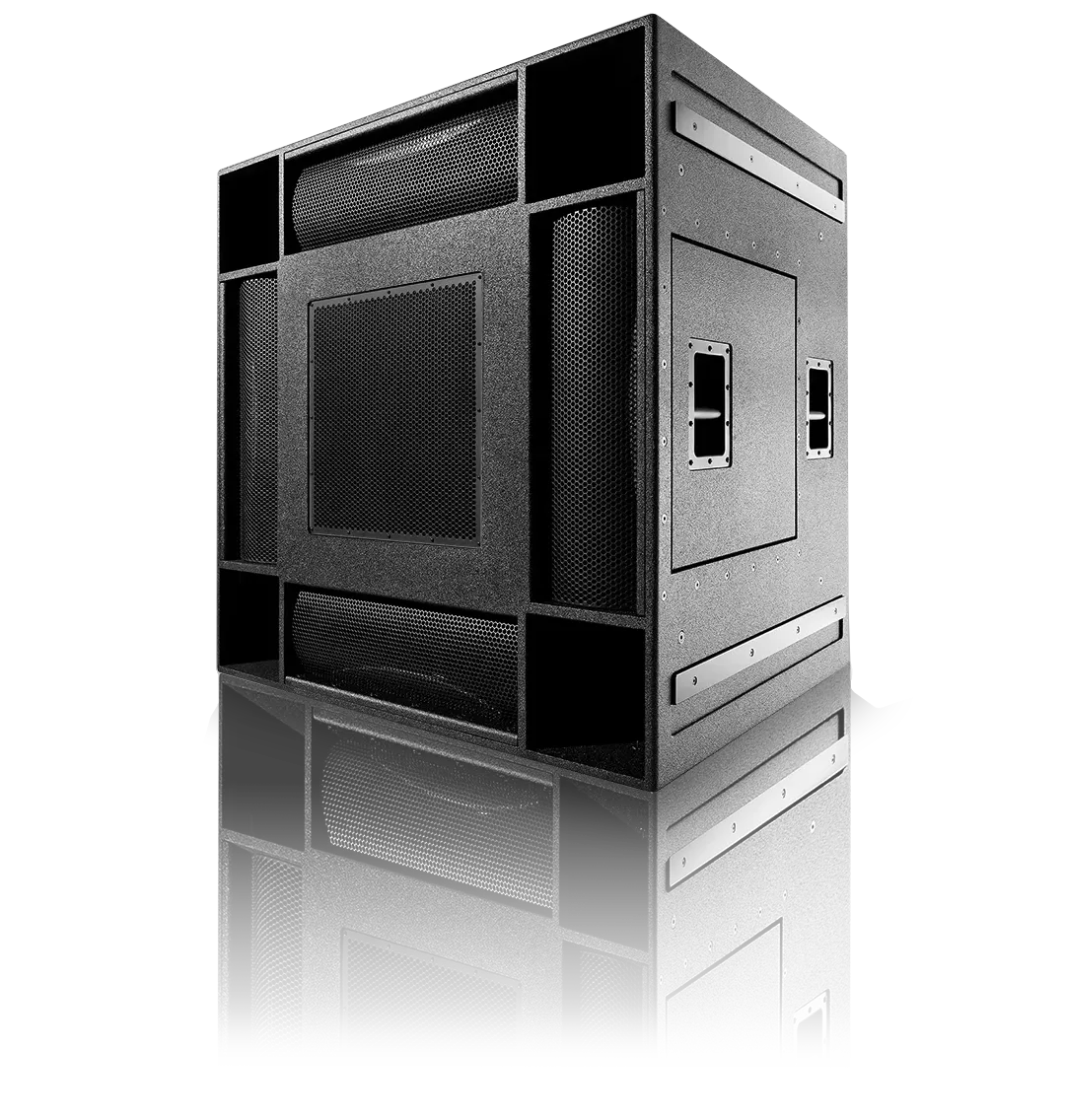
A point source loudspeaker radiates sound from a single origin point. The cabinet contains drivers, one or more woofers, a midrange, a compression driver, all loaded into a single enclosure with a defined dispersion pattern. The Krakatoa, for example, is a point source: five 18" subwoofers and a high-frequency driver in one cabinet, throwing a consistent coverage pattern across its rated dispersion angle.
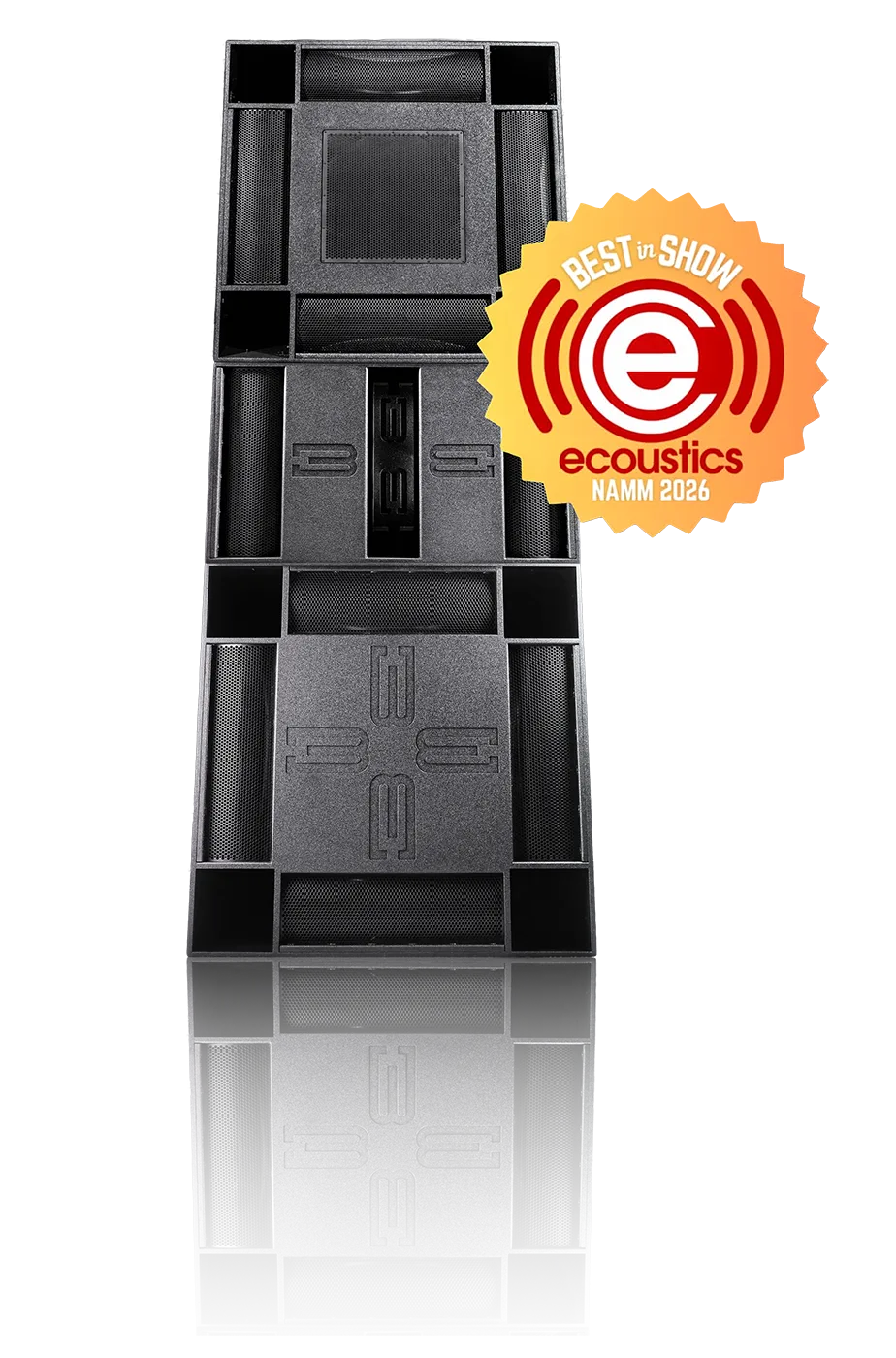
Point source systems have been the backbone of live sound for decades. They're well-understood, straightforward to deploy, and, when designed well, extraordinarily powerful for their size. A single Krakatoa can cover 1,000 people. A Stackatoa (Krakatoa stacked with a Sublim8 full-range top) can anchor a festival main stage.
What Is a Line Array?
A line array is a column of speaker elements that work together to create a coherent wavefront. Instead of a single point of origin, the sound comes from a vertical line of sources, which changes how the energy disperses. In the far field, a properly coupled line array maintains output over longer distances than a comparable point source system.
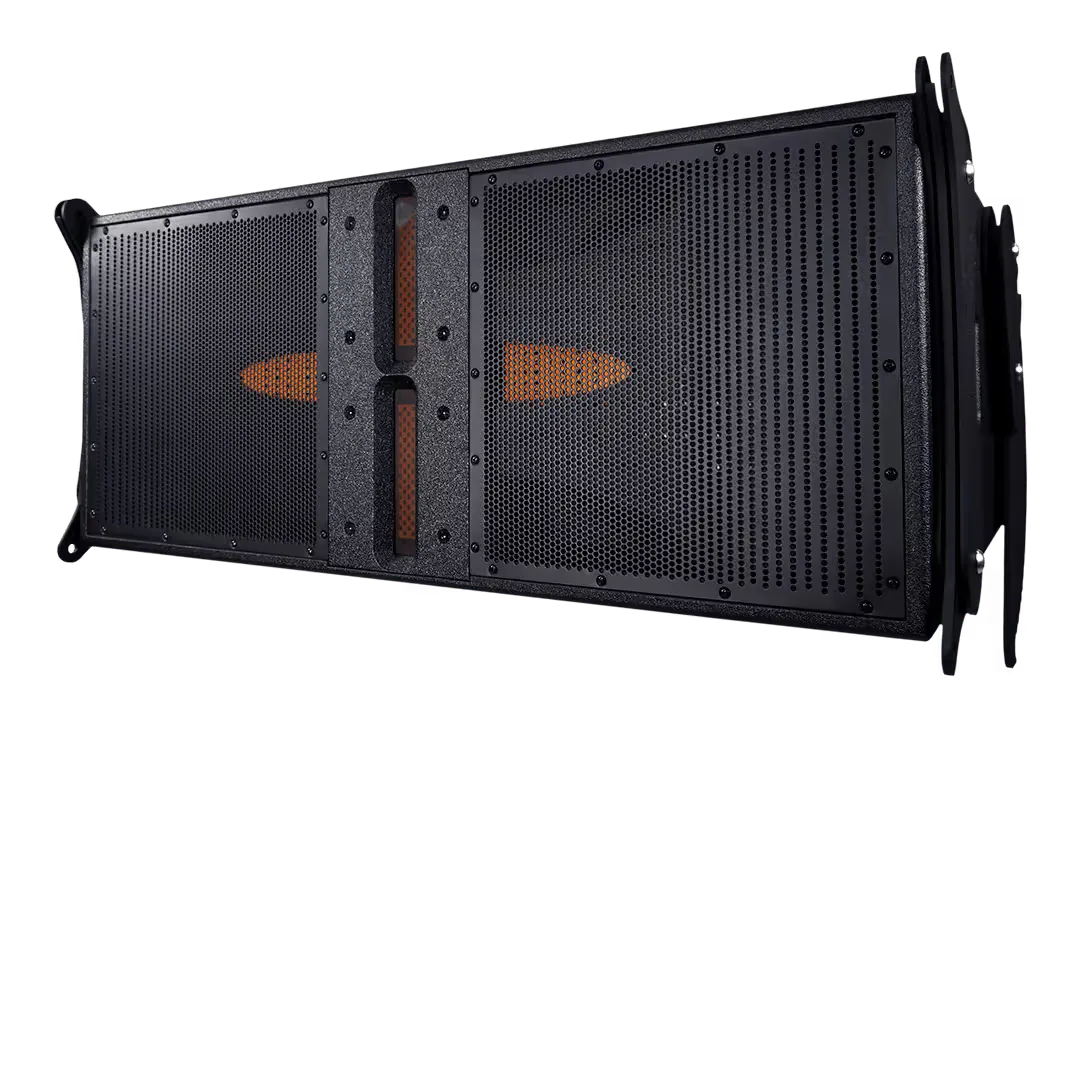
The BASSBOSS MFLA-MK3 is a powered line array element: a self-contained cabinet with its own amplification and DSP, designed to be flown or stacked with other MFLA-MK3 units. Each element knows it's part of a larger system. The longer the array, the narrower the vertical dispersion and the further the controlled throw.
Line arrays became the default for large-scale touring in the 2000s, largely because they enabled consistent coverage in 20,000-seat arenas. They're not inherently better than point source. They solve a different set of problems.
Where Point Source Excels
Point source shines in applications where you need maximum SPL in a defined area, fast deployment, and a compact footprint.
For outdoor festivals up to 10,000 people, a well-designed point source system like a Krakatoa or Stackatoa pair delivers output that a small line array simply cannot match, with a fraction of the setup time. You truck in two cabinets per side, position them, and you're done. No flying, no rigging, no delay between element positions to worry about.
For venues under 500 people, point source is almost always the right answer. The coverage pattern is predictable, the SPL is more than sufficient, and the system can be deployed by one person in under an hour. Point source systems also tend to behave more intuitively for engineers who didn't grow up on line arrays.
Where Line Array Excels
Line arrays solve problems that point source cannot: controlled vertical dispersion over very long distances, and even coverage in venues with complex geometry.
In a 2,000-seat theater where the balcony is 40 meters from the stage, a flown line array maintains consistent SPL from front to back in a way a point source at stage level cannot. The vertical pattern narrows with distance, keeping energy off the ceiling and floor and directing it at the audience instead.
Large outdoor stages with 20,000+ attendance benefit from line arrays for the same reason: you can dial in the throw, add delay fills for the back of the field, and maintain consistent coverage across a large area with a single coherent system per side.
The MFLA-MK3 is designed for exactly this: production environments where vertical pattern control and long throw matter more than maximum SPL from a small footprint.
Hybrid Setups: When You Use Both
Many large-scale productions use both technologies at once. A common configuration: flown line array for mid-field and far-field coverage, ground-stacked point source clusters for near-field and fill zones, and separate subwoofer arrays (cardioid or end-fired) for low-frequency control.
This isn't overbuilding. It's the right tool for each zone of the venue. Line arrays handle the controlled far-throw coverage. Point source handles the near-field where a flown array's pattern becomes too tight. The combination of MFLA-MK3 elements with Krakatoa ground stacks is a setup BASSBOSS systems are used in regularly at large festivals.
Hybrid systems require more system design effort: delay alignment, gain structure, and coverage overlap all need to be addressed. For temporary events, this is usually done by the system engineer in the days before the show.

The Cost and Logistics Reality
Line arrays cost more to buy, more to transport, and more to deploy. A modest line array rig requires a truck (not an SUV), a crew of at least two people, and time to fly, align, and tune the system. For permanent installs this investment is justified. For weekly touring or rental work, it needs to pencil out.
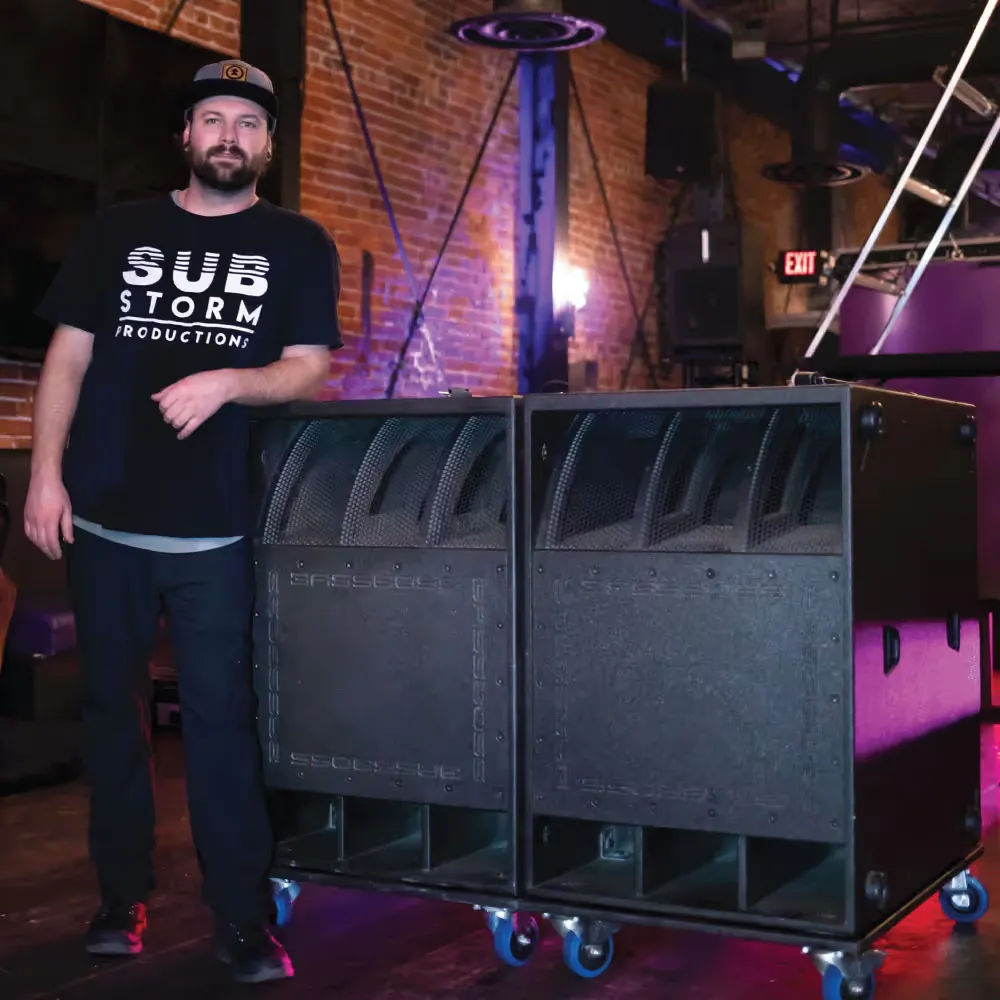
Point source systems are more capital-efficient for most rental companies and touring acts. Two Krakatoas and a Stackatoa configuration can be loaded by two people in under an hour and deliver output that rivals most small line array rigs, at a significantly lower ownership cost.
There's also the rigging reality: flying a line array requires a venue with adequate rigging points and a crew rated to use them. Ground-stacked point source systems work everywhere.
How to Choose, and When Each Wins
Start with your application. If your events are under 2,000 people, primarily outdoors or in venues without complex geometry, and you need fast deployment: point source is almost certainly the right answer. If you're doing permanent installs in large theaters, arenas, or houses of worship with long throws and complex coverage requirements: line array is the tool.
If you're scaling a rental company, start with point source. It's more versatile across event sizes, easier to train crew on, and generates revenue faster. Add line array capability as your events grow into the territory where it's genuinely necessary.
BASSBOSS makes both. The Krakatoa and Stackatoa are among the most capable point source systems available at any price. The MFLA-MK3 is a genuine touring-grade line array element with all the amplification and DSP onboard. The right choice isn't about brand. It's about what your events actually need.
Not sure which direction is right for your application? That's exactly what a free consultation is for.